BuildAnEMDrive.org
In 2015, I read a paper about a researcher in Germany had managed to get an EM Drive device to produce thrust in a vacuum chamber. Which meant I had to actual learn what an EM Drive device was.
The EM Drive phenomenon was a device that was proposed with two remarkable properties:
It ran entirely on electricity, meaning it could utilize energy available in the solar system through solar panels
It shouldn’t work, since the conservation of momentum didn’t seem to hold up.
The problem with #2 was that the EM (electromagnetism) equations seemed to balance and produce a forward thrust. Normally, the smart money is that, if the equations you have balance but you’re missing something important like the Conservation of Momentum, there’s an equation you haven’t included that makes up the difference. But no one was proposing what that equation was (no one has yet, either, as far as I know. I have a suspicion, but not enough mathematical or physics background to document it properly). The few proposal that were being put forward were demonstrably wrong, meaning the entire public discourse was pretty poisonous, with reputable scientists in other fields than EM physics proposing theories that were wrong (EM is pretty niche and often behaves in ways even experienced physicists don’t get right), and EM specialists finding the situation plausible and often getting more intransigent as the larger community was obviously not actually listening, and “science communicators” relying on the, “sneer until popular” mode of discussion that makes everything worse.
Because of my prior work with the Space Frontier Foundation, I saw this as an opportunity to demonstrate that putting a test article in orbit was actually cheaper at this point than spending sufficient money to test the article on the ground in a way that could show results (the thrust was calculated to be really, really small), but could control for enough variables to make a failure convincing to the ideas supporters. And, on the way, I intended to film a series of YouTube videos describing how to translate a scientific paper into a physical design that could be built.
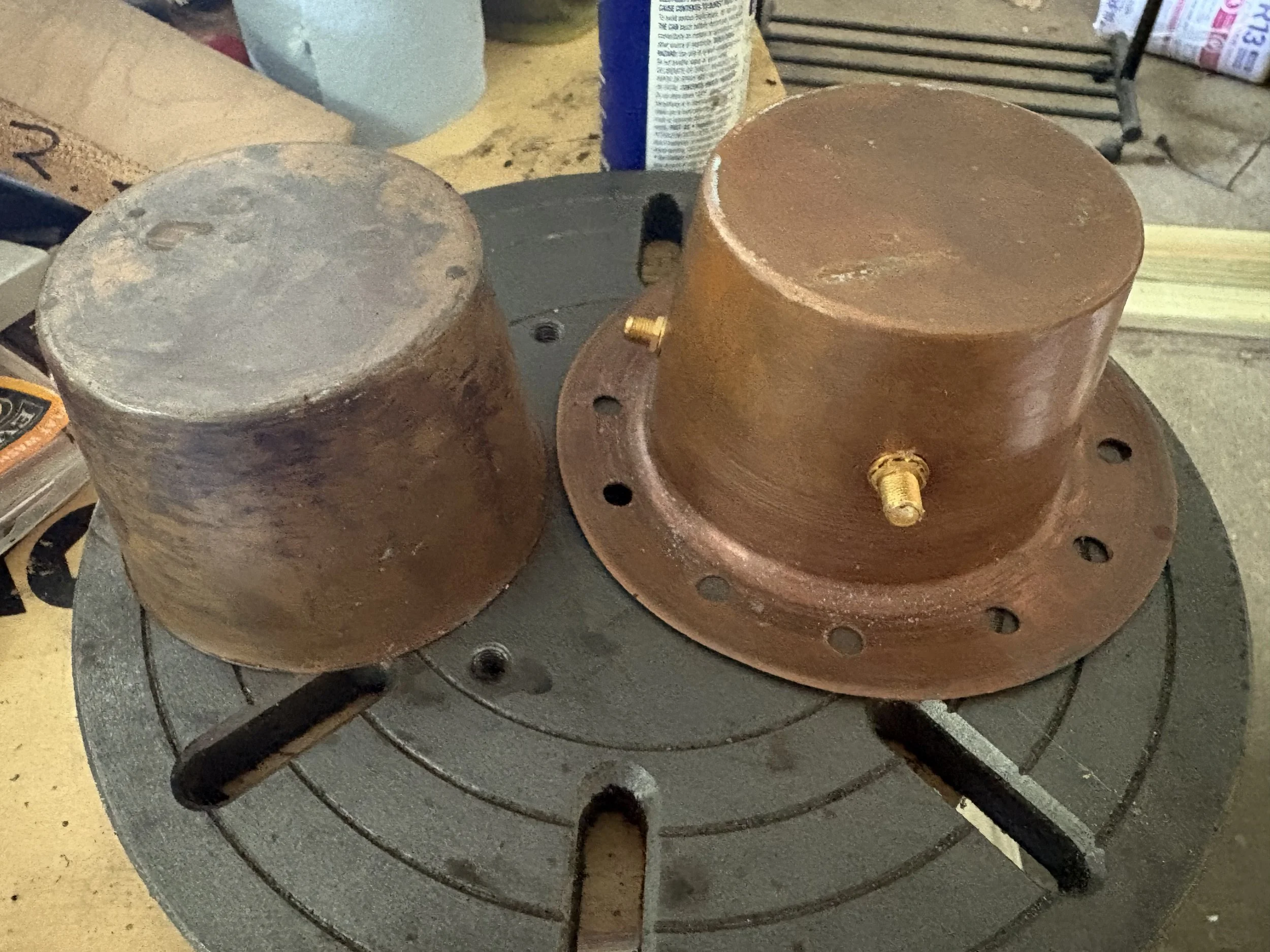
The idea ended up not getting anywhere. I wasn’t successful in raising the needed money, and while I built a few prototypes and concept pieces, never found a good way to produce the videos to explain the ideas properly. And then the same researcher that wrote the original paper, Martin Tajmar, conducted additional research and showed conclusively that the positive results that he and other researchers at NASA and other places were due to other effects and the device doesn’t work. The only thing that came out of it was a paper I wrote, which I’ve linked below, and some cool photos and a lot of learning for me.